What is a car loan "payoff scam"?
A payoff scam — the auto finance industry calls it artificial paydown fraud — is when a borrower makes loan payments with money that isn't real, sells the car while the loan looks nearly paid off, collects the "equity," and disappears before the payments bounce. When they do, the loan balance snaps back to what was really owed, and the buyer who paid out that equity is left holding the gap.
We know because it just happened to us. In September 2026, a seller walked away with a $28,500 equity check from Maverick Motors. Ten days later, the lender said the loan on that same car was about $96,000. Here's exactly how it played out, how common this kind of fraud has become, and what both buyers and honest sellers can do about it.
What happened in our case?
We've removed the seller's name and identifying details. The facts below come from the signed deal documents and the lender's own payoff figures.
- The offer. A seller ran his late-model luxury SUV through our online appraisal and accepted a cash offer of $74,100.
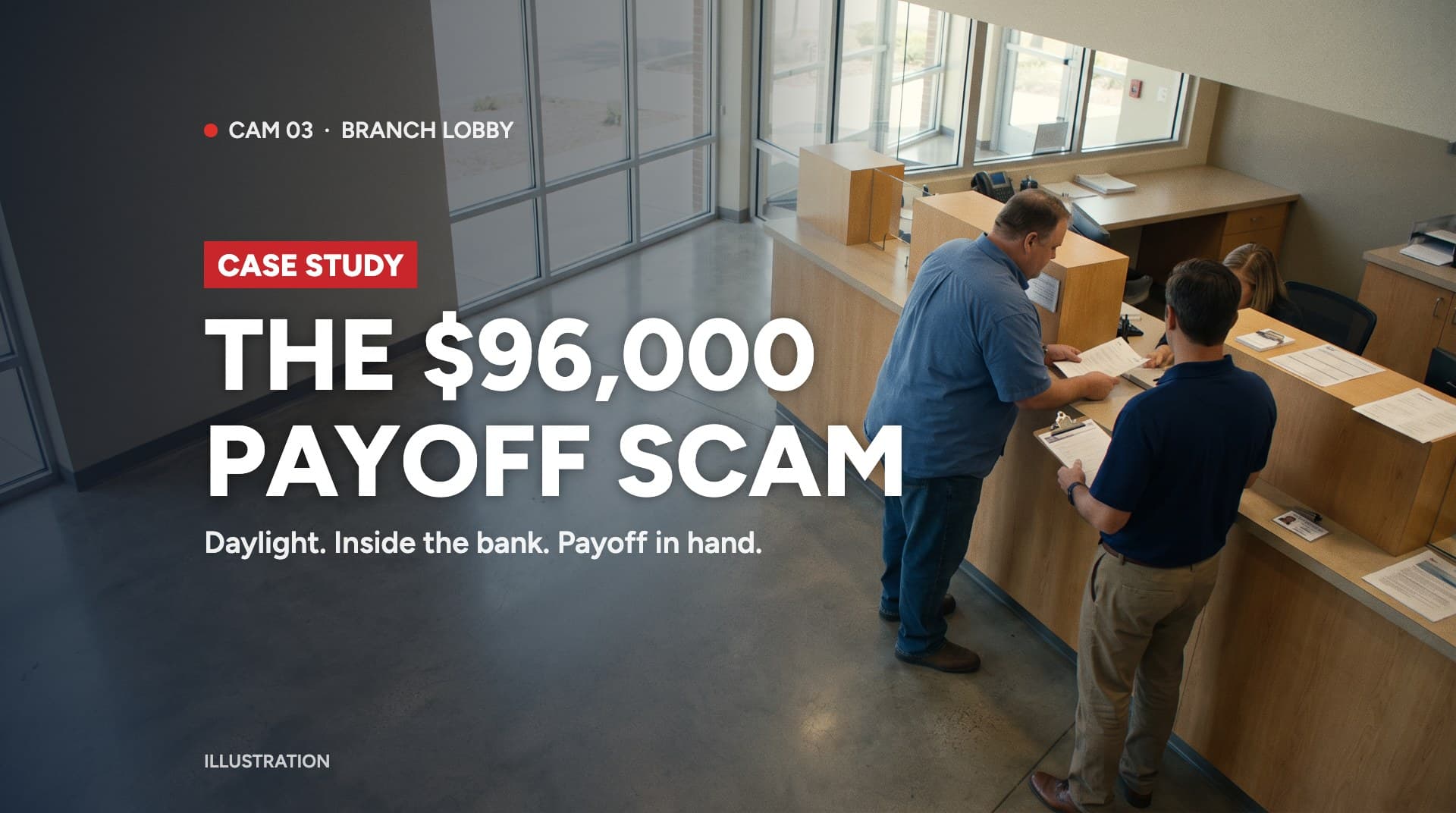
- The meeting. Our buyer met him at a branch of his lender — a major national bank — inspected the vehicle, and went inside with him to get the payoff.
- The payoff. Bank staff printed a payoff statement right there, with a bank confirmation number. It showed a principal balance of $45,358.69 and a 10-day payoff of $45,566.59. The seller didn't bring it with him; the bank produced it while our buyer stood there.
- The paperwork. Based on that payoff, he signed a disclosure of equity showing $28,533.41 in positive equity, a payoff authorization, and a bill of sale.
- The equity check. We paid him the $28,533.41 and took the vehicle.
- The next morning. When our office pulled the payoff electronically through the lender's dealer channel, it came back at $67,272.03 — about $21,700 higher than the day before.
- Nine days later. The payoff had climbed to roughly $96,000.
Here's the tell. The daily interest on the first payoff was $11.42 on about $45,400. On the second, it was $16.87 on about $67,000. Both work out to the same interest rate, roughly 9.19%. The rate never changed — the principal did. A lending contact later told us the customer had made several payments and then cancelled them.
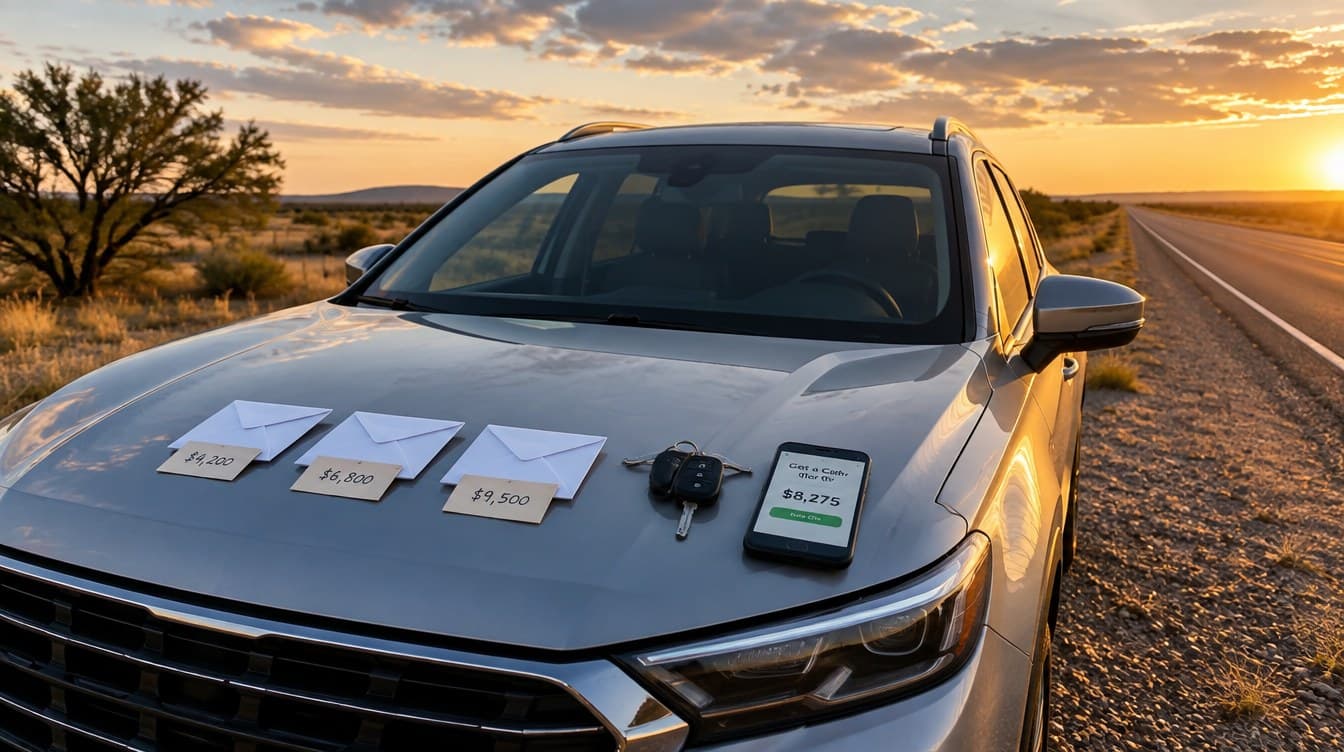
Payments go in, the balance drops, a payoff gets printed off the temporarily lower number, the car gets sold — and then the payments come back. By then, the seller has the check.
Looking back, there were other signals too. The phone number used for identity verification was an internet-based (VoIP) line. The ID was from a different state than where he met us, and the device location during verification didn't match either. Once we found the discrepancy, he stopped answering. The matter is now with our attorney and law enforcement. The vehicle is secured, and we haven't paid the lender either payoff amount.
How does artificial paydown fraud work?
Point Predictive, a lending-fraud analytics firm, defines it as borrowers using "bad checks to pay down or pay off the loan," with the aim of selling or trading in the car "for profit before the check bounces." It's a form of first-party fraud — the borrower is real, the loan is real, and the person committing the fraud is the account holder.
It works because of timing gaps in how payments clear:
- Most ACH returns (insufficient funds, closed account, "no account found") come back within 2 banking days, per the ACH return rules.
- Disputed or "unauthorized" consumer ACH debits can be returned up to 60 calendar days after settlement.
- Checks typically must be made available within one to two business days under the Federal Reserve's Regulation CC, but a bad check can still be returned after the money "shows up."
So a lender can post a payment, lower the balance, and print an accurate-looking payoff — and still have that payment reverse days or weeks later. Multiple payments returned at different times explain why a balance can keep climbing, the way ours went from $45,000 to $67,000 to $96,000.
Has this happened to other dealers?
Yes. In one widely reported 2023 case in Oklahoma City, a seller made fraudulent ACH transfers to his auto loans the day before selling two vehicles to a dealership. When the dealer checked the payoffs, one loan showed just $1,713.23 owed and another about $2,244. The dealer paid him $46,272.97 and $64,256.
"One to two days post sell," according to local news coverage of the case, the transfers reversed with the reason "No Account Found," and the full balances came back. The lenders wouldn't release the titles. He later pleaded guilty and was ordered to pay $138,109.44 in restitution.
Automotive News covered the pattern in March 2024, warning that artificial paydown fraud leaves both dealers and lenders with losses.
How big is auto fraud right now?
- Point Predictive's 2026 Auto Lending Fraud Trends Report estimates auto lending fraud exposure hit a record $10.4 billion in 2025, up from $9.2 billion in 2024. First-party fraud — the kind in our case — makes up 69% of that total.
- TransUnion reported in July 2026 that auto first-party fraud losses rose from $88 million to $323 million between Q3 2018 and Q3 2025, an increase of 267%.
- The FTC received about 3 million fraud reports with $15.9 billion in reported losses in 2025.
- FinCEN said bank reports of suspected check fraud nearly doubled, from more than 350,000 in 2021 to over 680,000 in 2022.
What other scams target car sellers and buyers?
Artificial paydown fraud targets the buyer. Plenty of scams run the other direction, aimed at honest people selling a car:
- Fake check overpayment. A "buyer" sends a check for more than your price and asks you to send back the difference. The check bounces after you've wired the money. The FTC's advice is simple: never accept a check for more than the selling price.
- The Zelle "upgrade" scam. A buyer claims you need a business Zelle account to receive payment and sends a fake email from "Zelle." Zelle doesn't send emails about marketplace sales, and there's no such upgrade.
- Curbstoning. A dealer poses as a private seller to unload problem cars. Red flags: multiple cars listed, a title not in the seller's name, and pressure to close fast.
- Title washing. Flood or salvage vehicles get moved to another state to obtain a clean-looking title, according to NICB. Carfax estimated about 45,000 vehicles were flood-damaged between April and July 2025 alone.
- VIN cloning. A stolen car gets a counterfeit VIN tag copied from a legitimate vehicle, plus fake ownership papers. NICB recommends checking every VIN before you buy.
- Odometer rollback. Carfax estimated 2.45 million vehicles on the road had rolled-back odometers in 2025, costing buyers about $3,300 each.
How can dealers protect themselves from payoff fraud?
- Pull the payoff yourself, electronically, from the lender. Don't rely on a printout — even one that comes from a branch. Our case proves a real bank document can be accurate when printed and wrong the next day.
- Ask about recent payments. A large payment in the last 60 days is a red flag, because that's the window in which an ACH debit can still be returned.
- Re-pull the payoff right before money moves. Then pay the lender first and release seller equity only after the payoff is accepted.
- Verify the person, not just the ID. Match the name on the ID, title, and loan. Watch for internet phone numbers, out-of-state IDs, and location mismatches during verification.
- Check the vehicle history and title before you buy, every time.
What does this mean if you're selling your car?
If you're an honest seller with a loan (and still weighing where to sell your car), none of this should slow you down much — but it explains why a reputable buyer verifies your payoff directly with your lender instead of just taking a statement you hand them. At Maverick Motors, we never ask sellers for a payoff letter. We pull and verify every payoff ourselves, because that's what protects the transaction for both sides.
If a buyer is willing to skip that step, or offers to "just pay you the difference" without confirming your loan, that should make you more careful, not less. When you're ready, you can get a firm cash offer on your car online in about 30 seconds — with the verification done properly.
Frequently Asked Questions
- What is artificial paydown fraud?
- It's when a borrower pays down a car loan with bad checks or ACH payments that later reverse, sells the car while the payoff looks low, and keeps the equity. When the payments bounce, the loan balance jumps back up and the buyer is left with the gap.
- Can a car loan payoff go up after it's printed?
- Yes. If a recent payment is returned or reversed, the lender adds it back to the balance. Most ACH returns happen within 2 banking days, but unauthorized consumer ACH debits can be returned up to 60 days after settlement.
- How do dealers verify a car loan payoff?
- Reputable dealers pull the payoff electronically, directly from the lender, rather than relying on a letter or printout from the seller. They also re-check it right before paying out and watch for large recent payments.
- How can I avoid scams when selling my car?
- Never accept a check for more than your asking price, ignore emails claiming you need to "upgrade" Zelle, and confirm any check with the issuing bank before handing over the car. Selling to an established dealer that pays you directly avoids most of these risks.