Selling your car privately can get you a higher price, but it also means handing a valuable, easy-to-move asset to a stranger. Scammers target car sellers because the amounts are big and many sellers have never done this before.
The scams fall into four groups: fake payments, information grabs, in-person theft, and paperwork traps. Here's how each one works, the red flag that gives it away, and how to protect yourself.
The quick list
| # | Scam | The red flag |
|---|---|---|
| 1 | Fake cashier's or certified check | Buyer insists on a check and wants the car fast |
| 2 | Overpayment / "shipping agent" | Check is for more than your price |
| 3 | Fake payment-app confirmation | Payment "pending" email, nothing in your app |
| 4 | Zelle "business account upgrade" | You're asked to pay a fee to receive money |
| 5 | "Accidental" payment-app transfer | A stranger asks you to send money back |
| 6 | Bounced personal check | Personal check for a car |
| 7 | Counterfeit cash | Large cash payment in an unlit spot or a rush |
| 8 | PayPal or chargeback reversal | Buyer insists on a reversible payment |
| 9 | Fake escrow site | Buyer picks the escrow company |
| 10 | Verification-code scam | "Read me the code I just texted you" |
| 11 | Fake vehicle history report link | Buyer insists you buy a report from their site |
| 12 | Test-drive theft | Buyer wants to drive alone with no ID |
| 13 | Key-swap theft | Buyer handles your keys out of your sight |
| 14 | Armed robbery or carjacking | Buyer pushes to meet at night or at your home |
| 15 | Paperwork traps | Signing over the title before payment clears |
Payment scams
1. The fake cashier's or certified check
Counterfeit cashier's checks are cheap to make and can look identical to real ones. Your bank may make the money available the next business day, but "available" doesn't mean the check is good. The FTC warns it can take weeks for a bank to discover a fake, and then it takes the money back out of your account (FTC).
Protect yourself: Meet at the buyer's bank and watch the teller issue the check, or call the issuing bank using a number you look up yourself, never the one printed on the check (Autotrader).
2. The overpayment or "shipping agent" scam
The buyer can't see the car in person. They're deployed, out of state, or "buying for a relative." They send a check for more than your price and ask you to wire the extra to their shipper or "agent." The check bounces, and the money you sent is gone. The FTC issued an alert in 2025 about this exact scam aimed at people selling cars online (FTC).
Protect yourself: Never accept more than your asking price, and never send money back to a buyer for any reason.
3. The fake payment-app confirmation
You get an email or screenshot saying the buyer's Zelle, Venmo, Cash App or PayPal payment is "pending" or "complete," but nothing ever shows up in your account. The FTC says scammers "send you a fake payment notification and hope you send the item before you realize it's a scam" (FTC).
Protect yourself: The money has only arrived when you see it in your own app or bank account. Ignore emails and screenshots.
4. The Zelle "business account upgrade"
A variation the BBB sees often: an email that looks like it's from Zelle says the buyer's payment is held until you upgrade to a "business account." The buyer offers to cover the fee, sends you a fake receipt, and then asks you to pay them back. No payment ever existed (BBB).
Protect yourself: No real payment service makes you pay to receive money.
5. The "accidental" payment
A stranger sends money to your Venmo or Cash App, then messages, "Oops, can you send that back?" The money came from a stolen card. When it's reversed, you're out whatever you sent (BBB).
Protect yourself: Tell them to cancel the payment through the app, and don't send anything yourself.
6. The personal check
A personal check can bounce or be canceled after the car is gone. Autotrader advises waiting for the funds to fully clear before signing the title over (Autotrader). For a car, that's usually days, and most buyers won't wait.
Protect yourself: Don't accept personal checks for a car.
7. Counterfeit cash
Cash feels safe, but a stack of hundreds counted quickly in a dark parking lot is easy to fake. Counterfeiters rely on rush and bad lighting.
Protect yourself: Do the deal at the buyer's bank and have the teller count and deposit the cash. If that isn't possible, learn the security features on U.S. bills (watermark, security thread, color-shifting ink) at uscurrency.gov and check them in good light.
8. PayPal and other reversible payments
PayPal's Seller Protection doesn't cover vehicles. Its ineligible list includes "motor vehicles," and it also excludes items delivered in person (PayPal). A buyer can dispute the payment after taking the car, and you may have no protection.
Protect yourself: Use a bank wire or a bank-verified payment instead.
9. The fake escrow site
The FTC says an escrow service can make online car sales safer, but only a real one (FTC). Scammers set up professional-looking fake escrow and shipping sites. The BBB has tracked these operations for years, often run by organized crime rings (BBB). The fake site "confirms" the money is held, you release the car or title, and nothing was ever deposited.
Protect yourself: If you use escrow, pick the company yourself, research it independently, and confirm funds with the escrow company by phone.
Information scams
10. The verification-code scam
The "buyer" says they need to make sure you're real and texts you a six-digit code to read back. That code lets them set up a Google Voice number tied to your phone number and use it to scam other people, or worse (FTC). The FTC's verdict: "a scam, every time."
Protect yourself: Never share a verification code with anyone, for any reason.
11. "Buy this history report from my site"
The buyer is very interested but wants you to buy a vehicle history report from one specific website first. The site collects your card number and personal information, and the buyer disappears (FTC). Fox News reported a new version in 2025 pushing an "ASR" report (Fox News).
Protect yourself: Offer the VIN and let a real buyer pull their own report. If you want one, use an approved provider listed at vehiclehistory.gov.
Also watch for: requests for photos of your title, registration or ID
A scammer with pictures of your title and driver's license has a head start on identity theft or a fraudulent title. Share the VIN and car photos only. Bring documents to the final, in-person sale.
In-person theft
12. Test-drive theft
The oldest trick still works: the buyer asks for a test drive and never comes back. In April 2026, Indianapolis police broke up a crew accused of meeting Facebook Marketplace sellers, asking for test drives, driving off, and quickly re-registering or selling the cars (Hoodline).
Protect yourself: Photograph the buyer's driver's license and confirm it matches the person. Check that they have insurance. Keep the title and spare key at home. Police are split on riding along, so read the robbery section below before deciding.
13. The key swap
A newer twist: the "buyer" brings a fake key for your make and model, swaps it with your real one during the test drive or while looking the car over, and hands the fake back. Later they come back with your real key and take the car. Fargo, North Dakota police warned sellers about it in 2023 (Valley News Live).
Protect yourself: Mark your keys so you'd notice a swap, keep them in your hand, and check them before the buyer leaves.
14. Armed robbery and carjacking
The most dangerous version isn't a scam at all. It's a robbery set up through a listing.
- July 2025, Gaithersburg, Maryland: A man selling a BMW on Facebook Marketplace met a "buyer" at his home. One suspect sat in the driver's seat while another pulled a gun and demanded the keys. Three men were arrested (Bethesda Magazine).
- 2024, New York City: NYPD linked at least nine robberies to two men posing as car sellers on Facebook Marketplace. They robbed buyers and sellers at gunpoint and with bats (ABC7 New York).
- 2020, Raleigh, North Carolina: A man meeting a Craigslist buyer to sell his Range Rover was killed. Afterward, Apex police advised sellers not to go on test drives with strangers: "If something happens to your car, that's better than something happening to you" (WRAL).
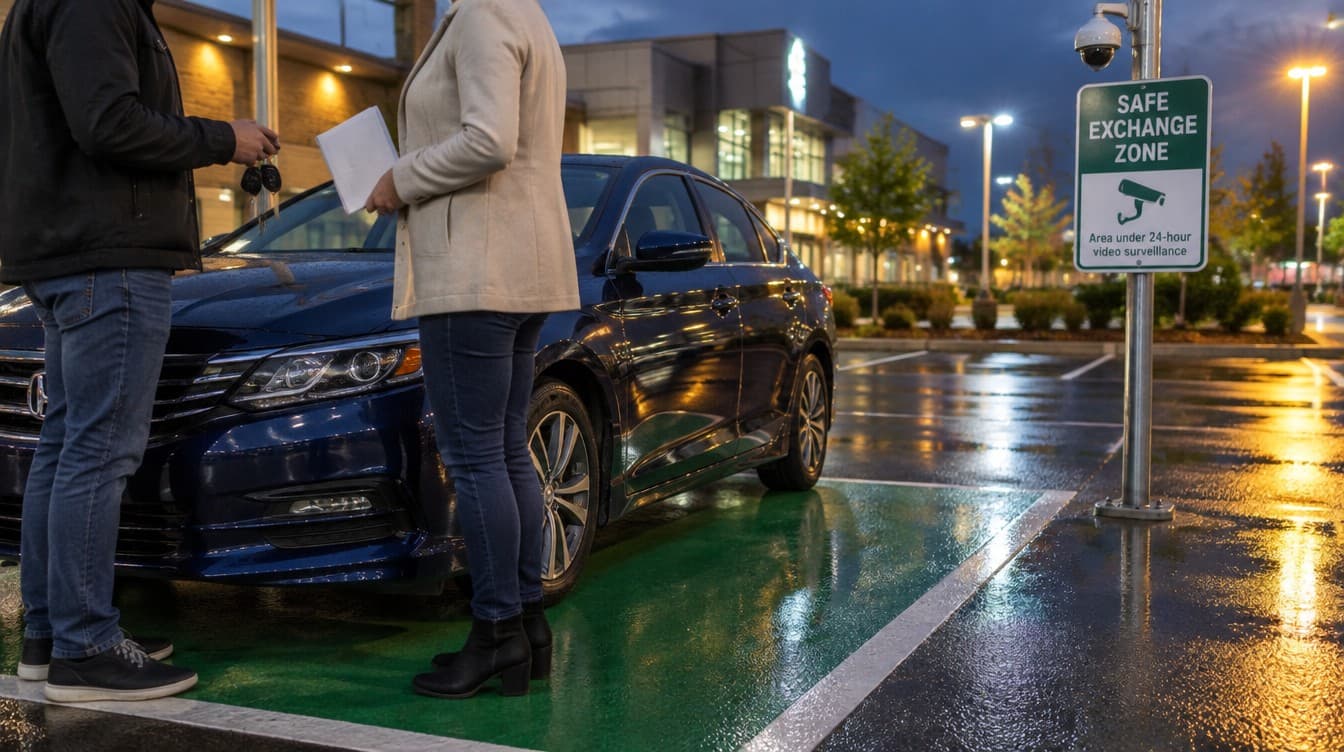
Protect yourself: Meet in daylight at a police station "safe exchange zone" or a busy, camera-covered lot, not at your home. Bring someone with you. If a buyer refuses a public meeting spot, walk away. No car is worth your safety.
Paperwork traps
15. Signing over the title too early, or not finishing the paperwork
- Don't sign the title or hand over keys until payment has fully cleared. Indianapolis police gave that exact advice after the test-drive thefts (Hoodline).
- Never leave the buyer's name blank. An "open" title lets the car change hands again with your name still attached.
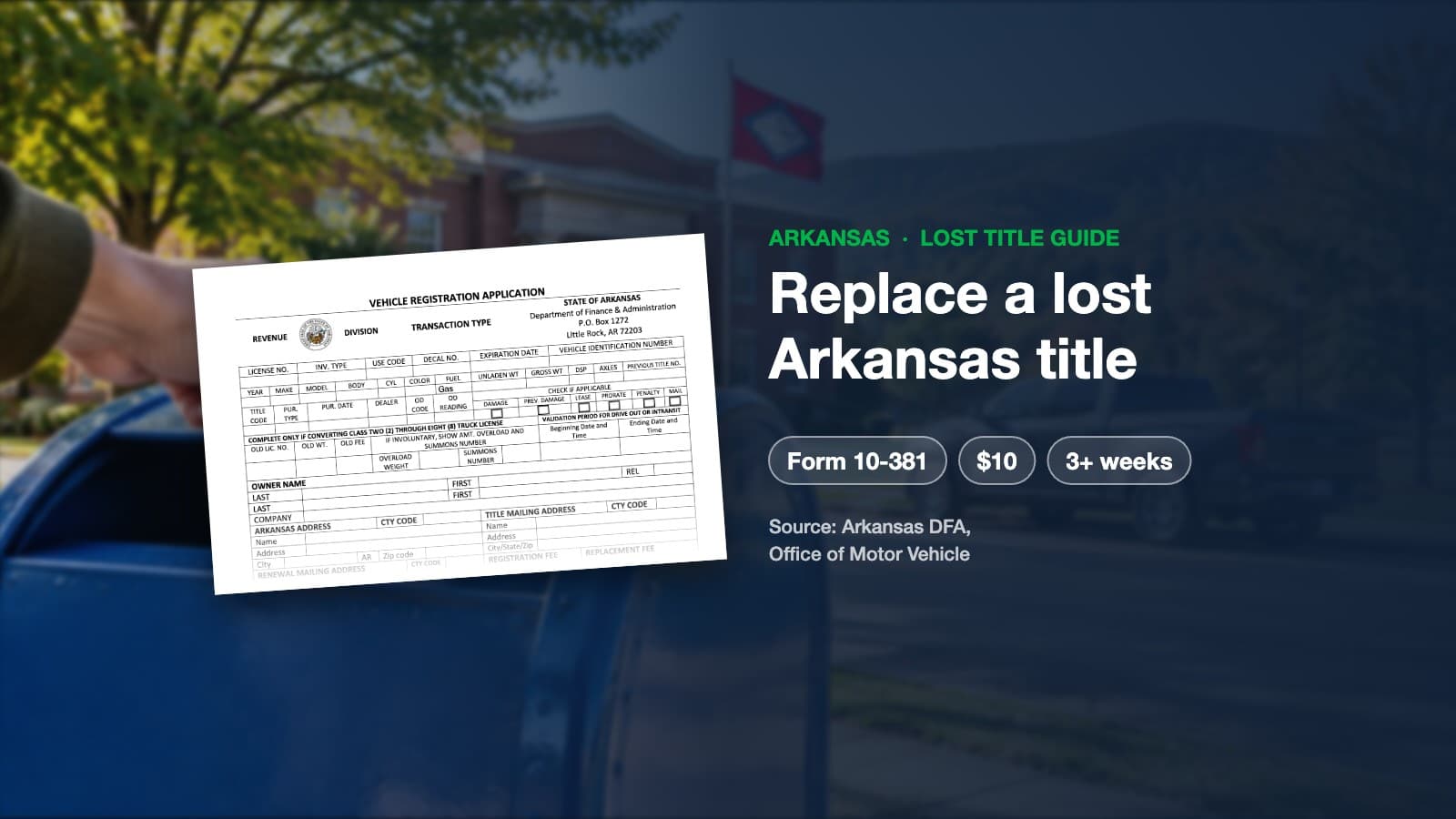
- File your state's transfer notice right away. If the buyer never retitles the car, tolls, tickets and even impound bills can come back to you. In Texas, that's the Vehicle Transfer Notification. In Oklahoma, it's Form 773 (see our Oklahoma title guide).
- Keep the title and registration out of the car. New Jersey State Police warn that a thief can use them to sell a stolen vehicle (NJSP).
Bonus: the fake loan payoff
If you still owe money on the car, a "buyer" may offer to pay your lender directly. A bad check or reversible payment can make the loan briefly look paid and get the title released. Then the payment bounces after the car is gone, and you still owe the loan. We walked through a real case in The $96,000 Payoff Scam.
How to sell your car privately and safely
- Screen buyers by phone, not just by text. Scammers avoid real conversations.
- Meet at a safe exchange zone in daylight, and bring a friend.
- Never share verification codes, and don't send photos of your title or ID.
- Photograph the buyer's license before any test drive. Keep your keys in hand and the title at home.
- Get paid at the buyer's bank with a teller-issued cashier's check or cash deposited on the spot, or by a bank wire you confirm in your own account.
- Never accept overpayment and never send money back.
- Sign the title only after funds have cleared, fill in every field, and file your state's transfer notice.
Or skip the strangers
Private sales can work, but every one of these risks comes from dealing with someone you can't check out. Selling to an established, licensed buyer removes most of them.
At Maverick Motors:
- No meeting strangers from a listing. You get a firm offer online in about 30 seconds, and we arrange pickup.
- No checks from people you've never met. You choose a wire or certified check. Every wire is verified with you by phone before it's released, and it must go to an account in the name of someone on the title.
- Verified identity on both sides. Everyone on the title verifies their identity before the sale.
- We handle the title and any loan payoff directly with your lender, so there's no payoff letter to fake and no open title.
See how we pay sellers, or get your Maverick Motors offer in about 30 seconds.
If you think you've been targeted, contact your bank immediately, report it to local police, and file a report at ReportFraud.ftc.gov. This guide is general information, not legal advice.
Frequently Asked Questions
- What is the safest way to get paid when selling a car privately?
- Complete the sale at the buyer's bank, where a teller issues a cashier's check or deposits cash directly into your account, or get a bank wire and confirm it in your own banking app. Avoid personal checks, PayPal and payment apps for a car.
- How do I know if a car buyer is a scammer?
- Common red flags: they can't meet in person, offer more than your asking price, ask you to send money anywhere, want a verification code, push a specific history-report website, or refuse to meet at a public safe exchange zone.
- Should I go on the test drive with the buyer?
- Police advice differs. Some departments say ride along so the car doesn't disappear. Others say not to get in a car with a stranger. Either way, photograph their license first, meet in a public place, bring someone with you, and keep the title and spare key at home.
- What is the key-swap scam?
- A fake buyer brings a dummy key for your car's make and model, swaps it with your real key during a test drive or inspection, and later uses the real key to steal the car. Mark your keys and keep them in your hand.
- Why does a buyer want me to read them a verification code?
- It's a scam every time, according to the FTC. The code lets them set up a Google Voice number linked to your phone number to scam other people. Never share it.
- What should I do after selling my car privately?
- File your state's transfer notice (in Texas, the Vehicle Transfer Notification) right away, cancel or move your insurance, remove your toll tag, and keep a copy of the bill of sale.